
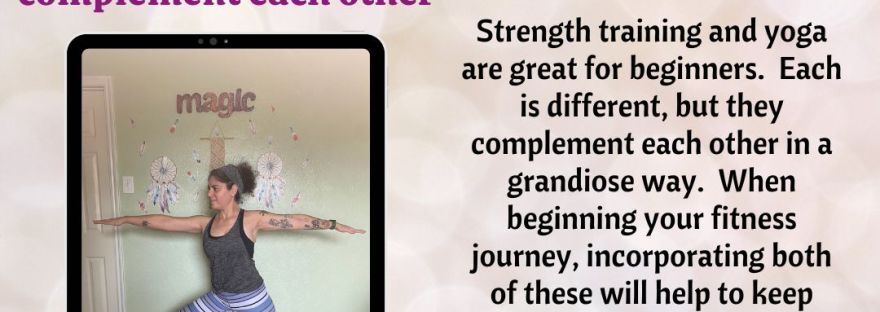
Strength training and yoga are great for beginners. However, I notice that people sometimes put them in their own separate classes, like as though you can only do one or the other!! How wrong of thinking this is. Each is different, but they complement each other in a grandiose way. When beginning your fitness journey, incorporating both of these will help to keep your workouts well rounded.

Vrksasana (Tree Pose) – Thigh 
Virbhadrasana II (Warrior II) 
Tadasana (Mountain Pose) – Front 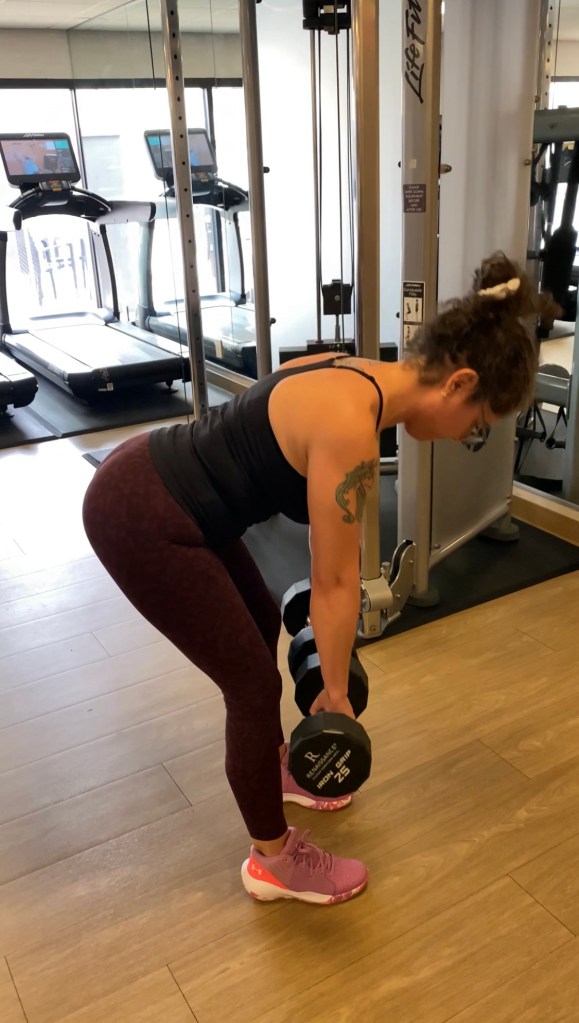
Even on vacation, I always find time to at least do a workout. It lifts my mood and helps me to have a great day. Strength Training is super important for me. It not only helps me with my mood, but also to strengthen my bones and build muscle. 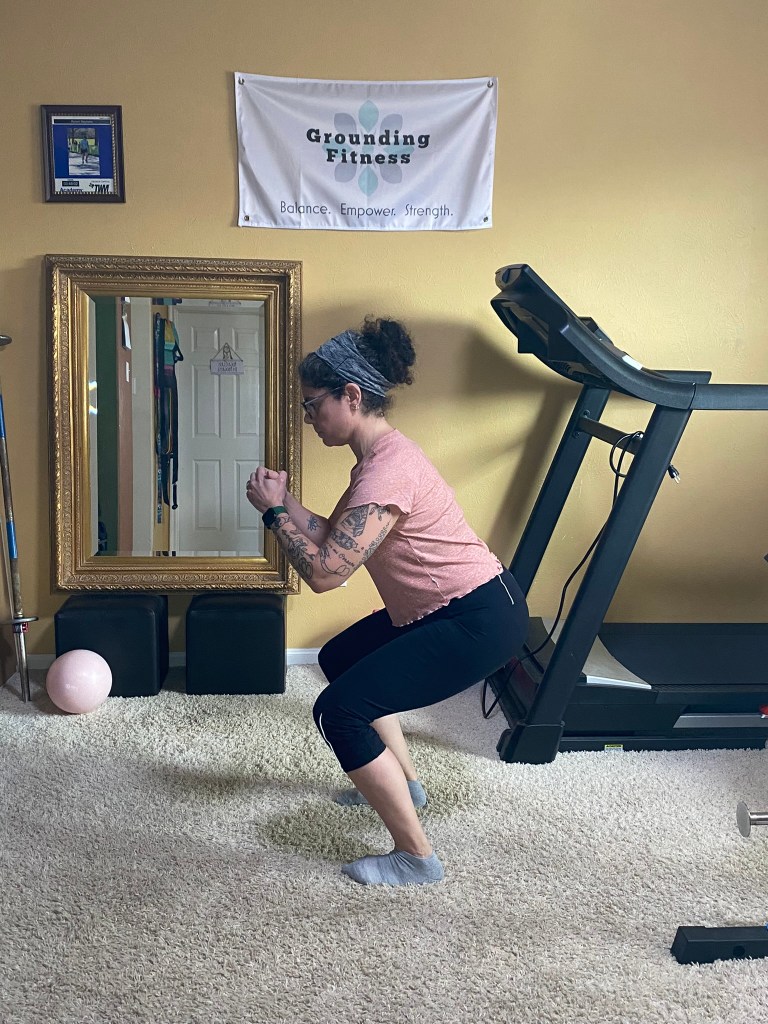
Bodyweight Squat 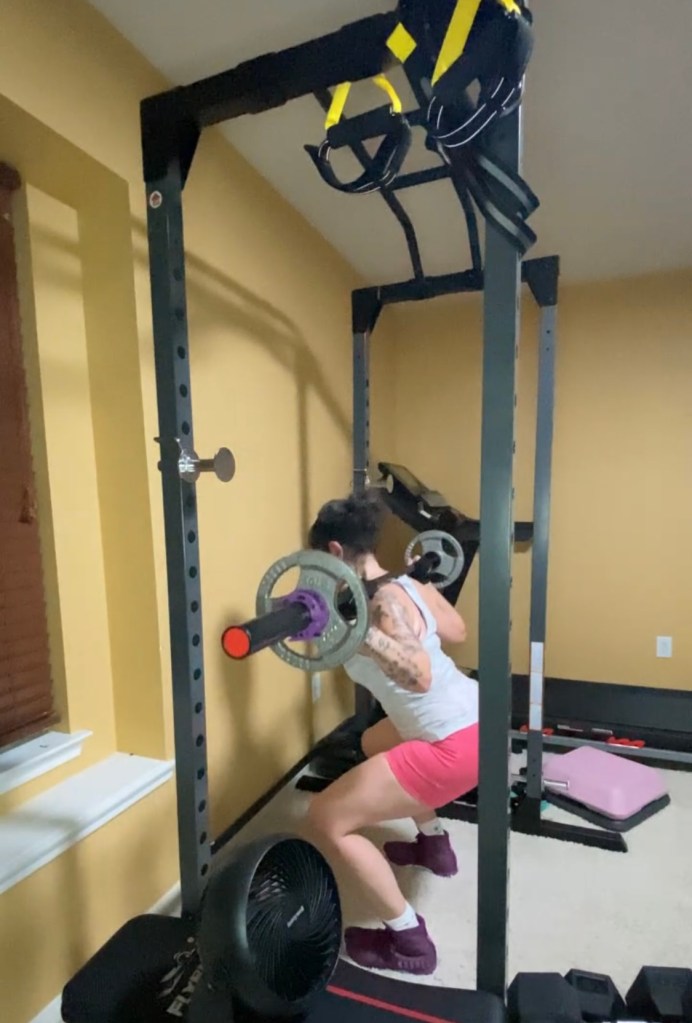
Below are some ways that strength training can help your yoga practice:
- Builds muscle strength that helps in challenging poses – strength training helps to target key muscles like the core, legs, and arms which are necessary when you are trying to do difficult poses like chaturangas, down dog, all the Warrior poses, & inversions (i.e. crow, handstand, forearm stand). Building the muscles necessary for these poses can help you to be sturdy when doing them, hold them for longer, and have stability and proper form. Doing exercises like push-ups, planks, and shoulder presses help the muscles needed for inversions.
- Improves stability & balance – although yoga is great for balance, so is strength training. For example, doing marches with a very heavy dumbbell requires not only balance (since you are slowly lifting your knee up) but also stability. Strength Training helps to strengthen the stabilizer muscles by doing exercises like single leg RDL, lunges, and squats which require balance and control, especially when holding a heavy dumbbell or two. This can help improve yoga poses like Tree Pose, Half Moon Pose, and Warrior III.
- Helps with injury prevention – when practicing yoga, you transition through many poses one after the other. Sometime, this can cause injury, especially if you don’t have strong muscles around the joints. For example, doing poses like Chaturanga and then transitioning to Upward Dog requires upper body strength (shoulders, chest, biceps, triceps). When doing strength training exercises like rows, push-ups, bicep curls, & triceps kickbacks, you build the muscle around the shoulders, elbows, etc, to help in these transitions and prevent injury.
- Encourages proper form and alignment – when strength training, it is important to perform the exercises with proper form. For example, rounding your back when doing deadlifts or arching your back when doing squats could cause back injuries. Strength training helps to strengthen the core, shoulder, and back muscles to help promote alignment of the spine. This strength and alignment will help you in various yoga poses.
Now on the flip-side, yoga can be VERY beneficial to your strength training workouts. It offers both physical and mental benefits to improve your overall strength and performance.
Here are some ways that yoga can help:
- It can increase your flexibility – having greater flexibility can help you to do exercises like squats, lunges, and deadlifts because you can go deeper into the form (especially deadlifts). For example, poses like the down dog and forward fold helps to stretch the hamstrings, which in turn will help your deadlifts and RDL’s.
- Improves your balance and stability – for example, poses like Tree Pose, Warrior III, & Eagle pose require lots of balance and stability. Practicing these poses (and others) will better your balance & strength, which in turn will help with squats and especially single leg deadlifts. For these exercises, you need good control over your body’s movements.
- Helps with core strength – a lot of the yoga poses require you to engage your core to protect you from injury. Having a strong core is important because it not only stabilizes your body, but also protects the lower back. Poses like the side plank, plank, & boat pose help to build strength which transfers over into strength training when performing push-ups, deadlifts, overhead presses, etc.
- Aids in muscle recovery – yoga helps you to stretch those tight muscles you get when strength training. When doing gentle yoga in between strength training session, it can help you to recover much quicker and avoid or reduce muscle soreness. It can also increase oxygen delivery to the muscles.
- Improves breathing – in yoga, breath control (or pranayama) is very important when going from pose to pose. You learn in yoga practice to control your breath and remain calm and focused especially when doing difficult poses. This transfers over to strength training and helps you maintain stability when performing difficult exercises like bench presses or powerlifting.
- Reduce stress and overtraining – strength training consistently without a break can cause burnout or overtraining. Yoga helps by promoting relaxation, decreasing stress, and enhancing your mental and overall well-being. Yoga promotes mindfulness and self-compassion which helps you to listen to your body. Incorporating yoga during your recovery days can help you to avoid burnout.
Whether you’re more into yoga or strength training, incorporating both into your workout routine can create a balanced program. You’ll have the yoga for mindfulness, flexibility, mobility, and balance and then the strength training for strengthening your muscles in order to perform the harder poses. It’s a win/win!!


 Grounding Fitness, LLC