

The practice of yoga has many benefits which includes cultivating a mind – body connection. Asanas (yoga poses) are the poses that you do when practicing yoga and depending on which one you incorporate into your practice, it can greatly increase mindfulness and help to calm your nervous system. This is achieved by focusing on your breath, body, and being present in the moment.
While just practicing yoga will definitely create calm and peace (especially slow flow yoga), there are a couple of specific asanas that you can do to enhance this. They are:
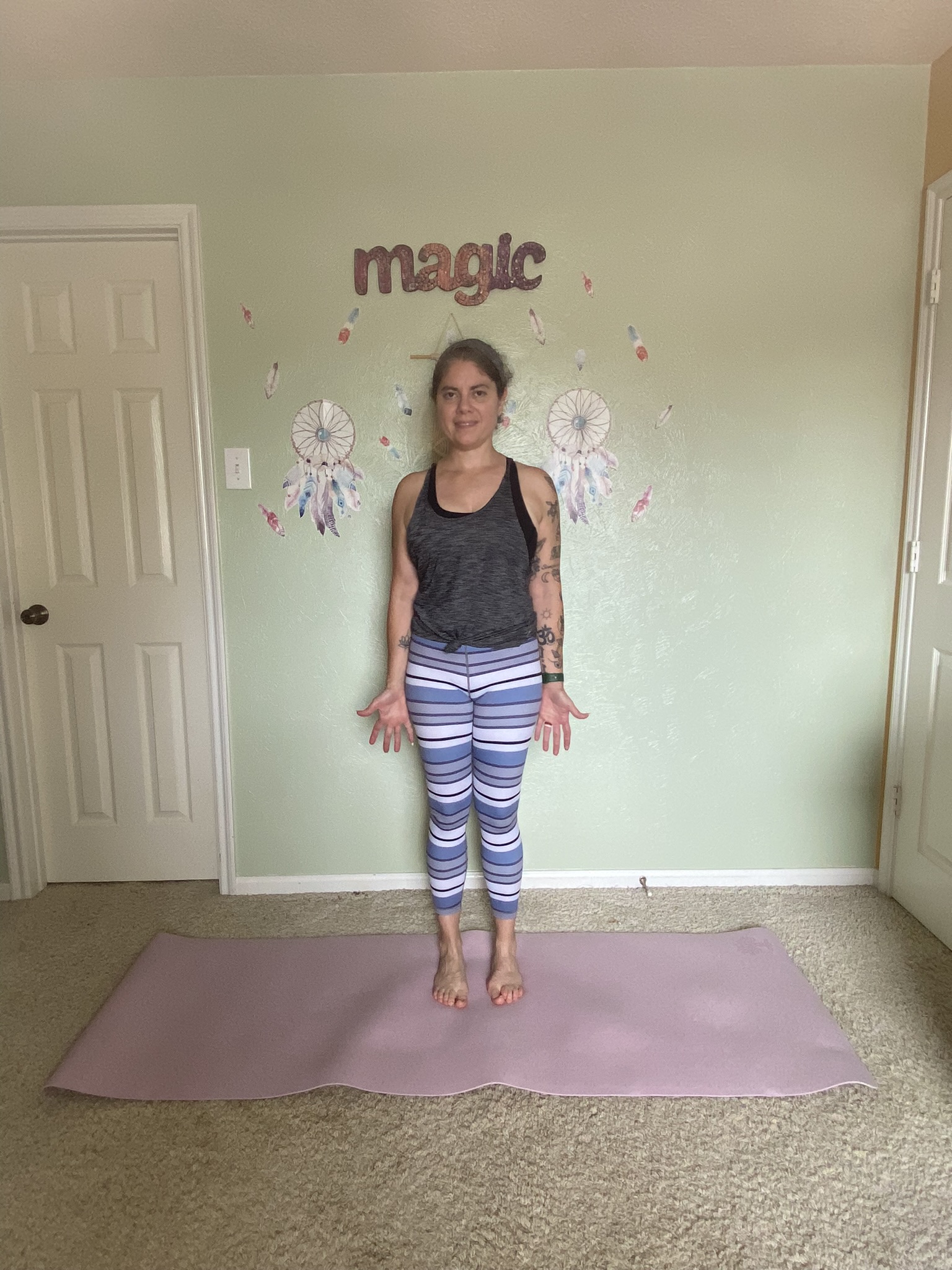
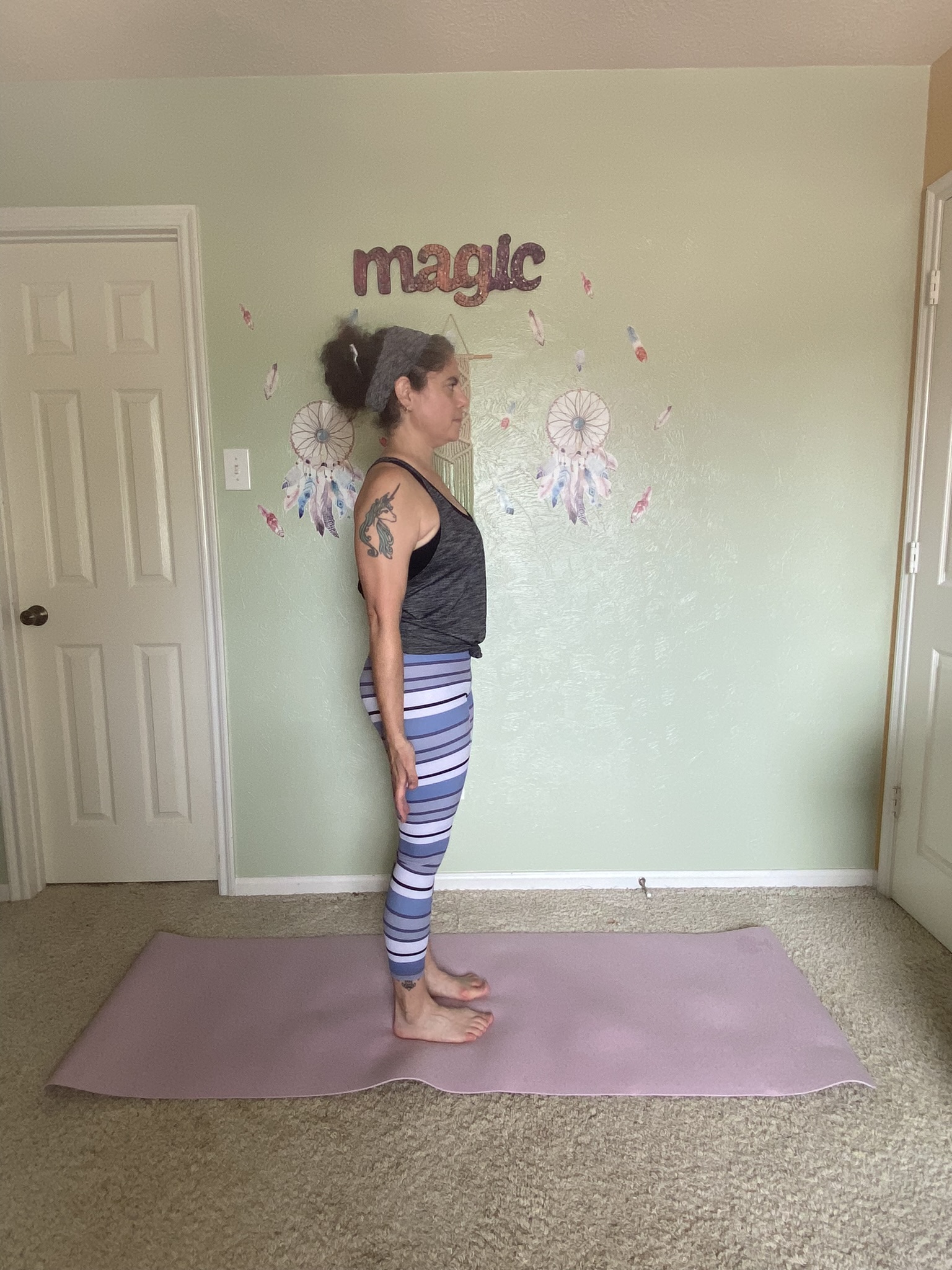
- Tadasana (Mountain Pose)
- Stand tall with your feet together, shoulders rolled back and relaxed, weight evenly distributed through your feet and toes, arms at sides.
- Take a deep breath and feel yourself being grounded to the floor. Imagine tree roots coming out of your feet and going into the earth making you strong, rooted, and grounded.
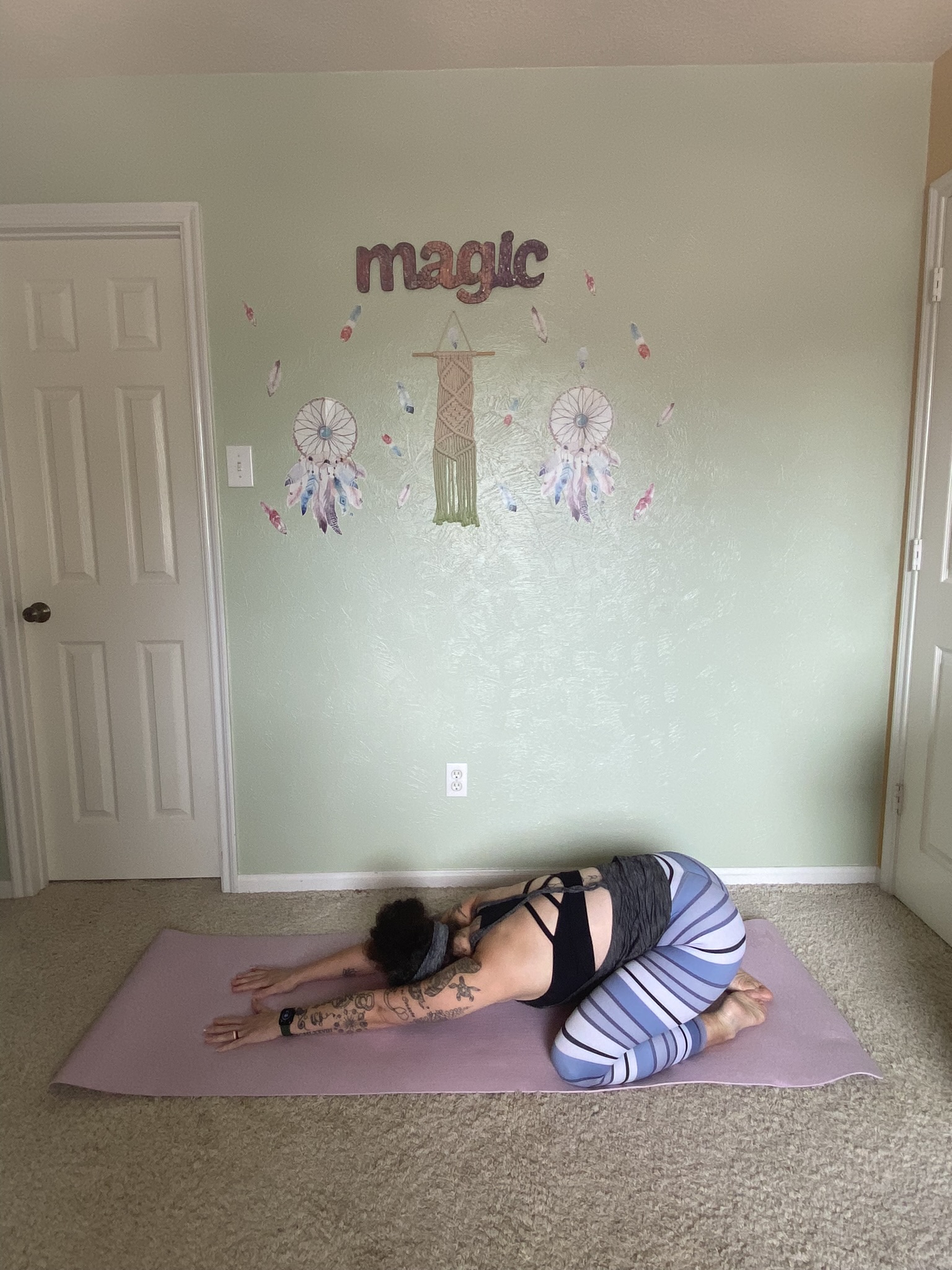
- Balasana (Child’s Pose)
- Kneel on the floor with your big toes touching and sit on your heels. Your knees can be wide or close together.
- Exhale and bring your arms forward as you lay your torso down between your thighs. Lay your hands in front of you “gripping” the floor, moving them further upward, in order to help you release the fronts of your shoulders and back.
- Vrksasana (Tree Pose)
- Stand and ground your feet. Shift your weight onto your left foot and place the sole of your right foot on either the floor, your calf, or your thigh making sure to avoid the knee.
- Bring your hands together at chest center in Anjali Mudra (prayer position) or any other position that is comfortable. Find your Drishti (a point where you softly gaze at) to help with the balance.


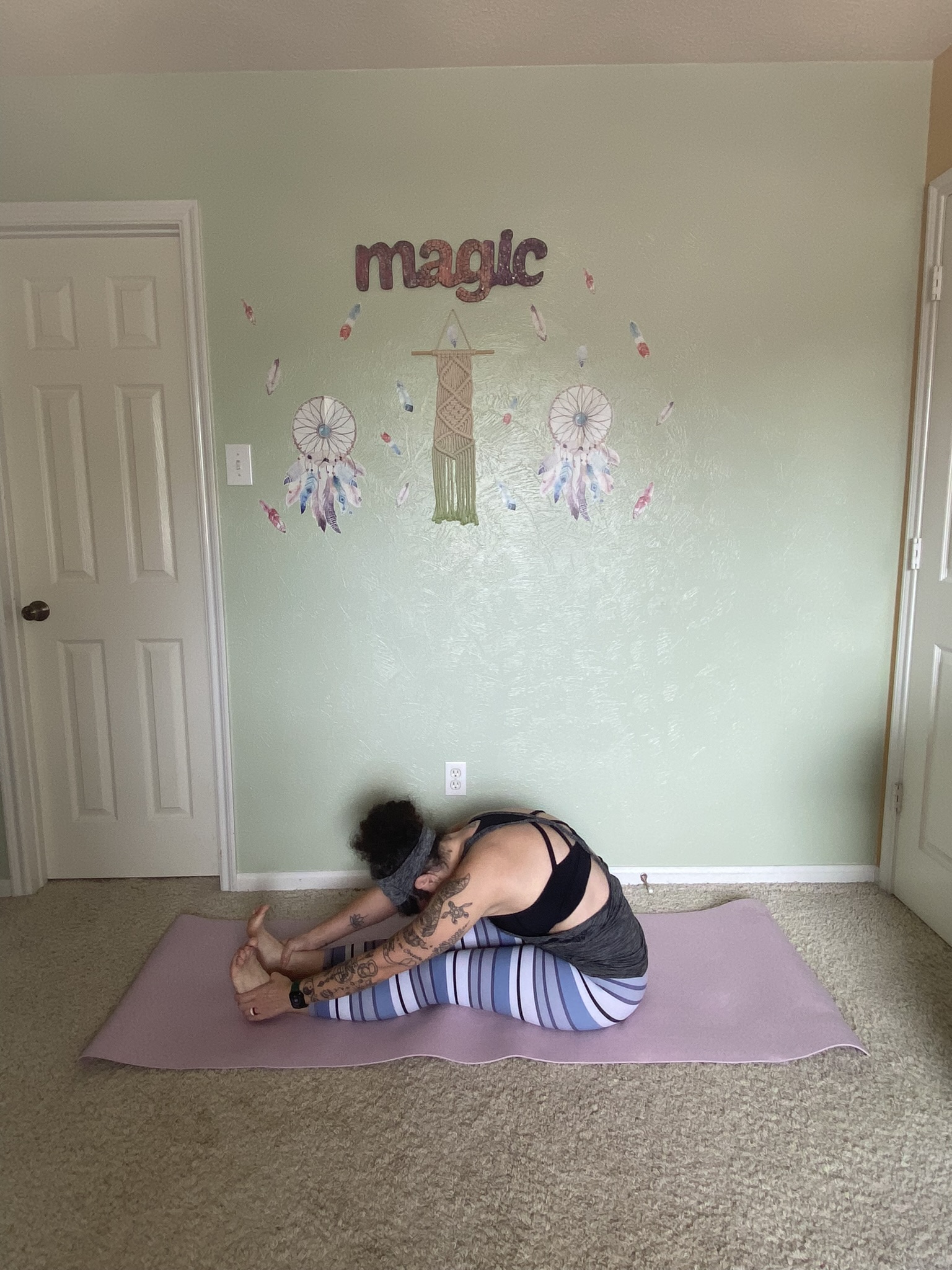
- Paschimottanasana (Seated Forward Bend)
- Sit on the floor with your legs straight in front of you. Inhale as you bring your arms up, then as you exhale allow your body to fold forward and relax completely onto the floor.
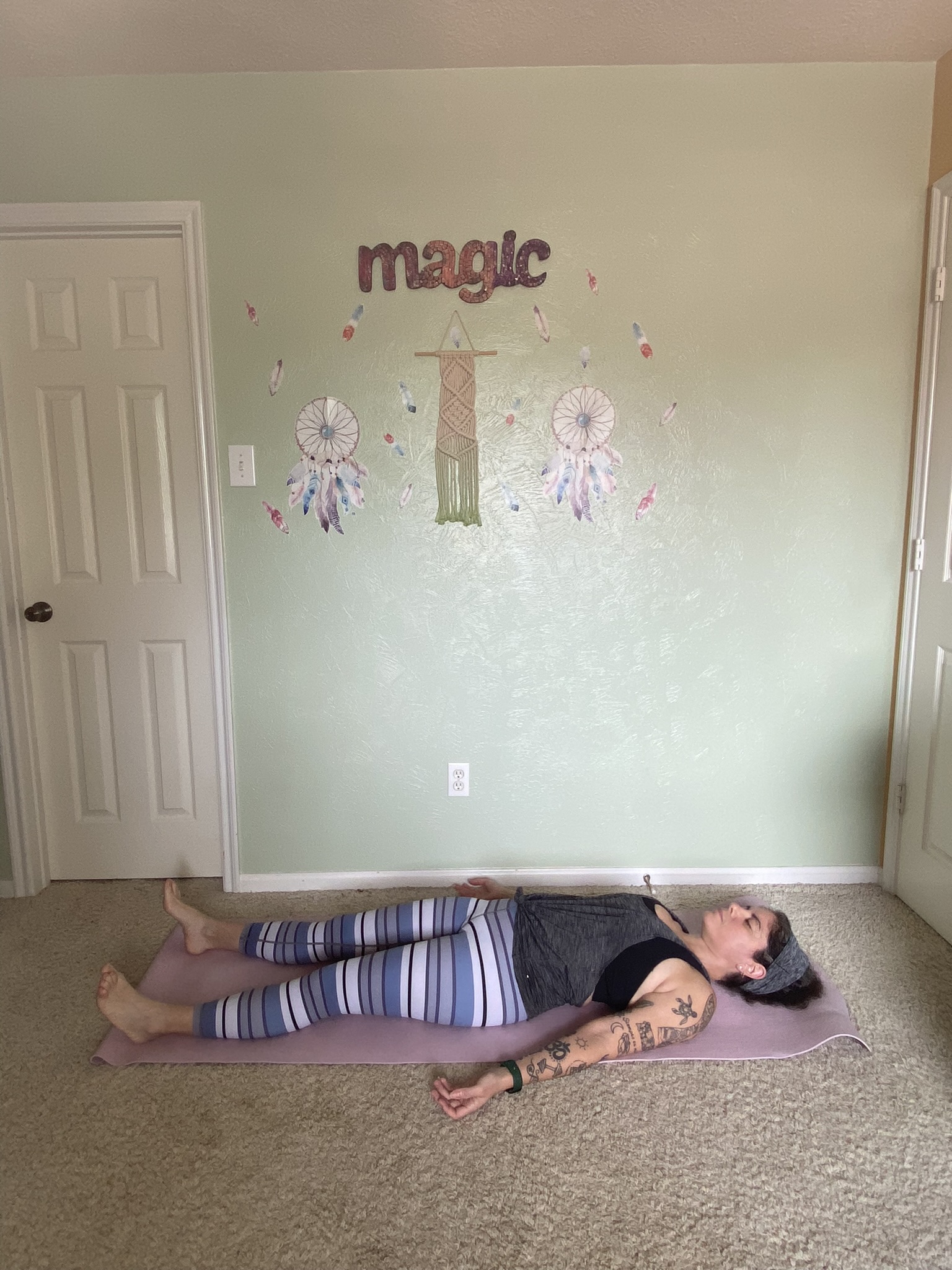
- Savasana (Corpse Pose)
- Lie on your back with your legs straight, arms at your sides with palms facing up (hands can also be at your belly or on your heart). Close your eyes and focus on your breath, allowing your body to relax completely into the floor.
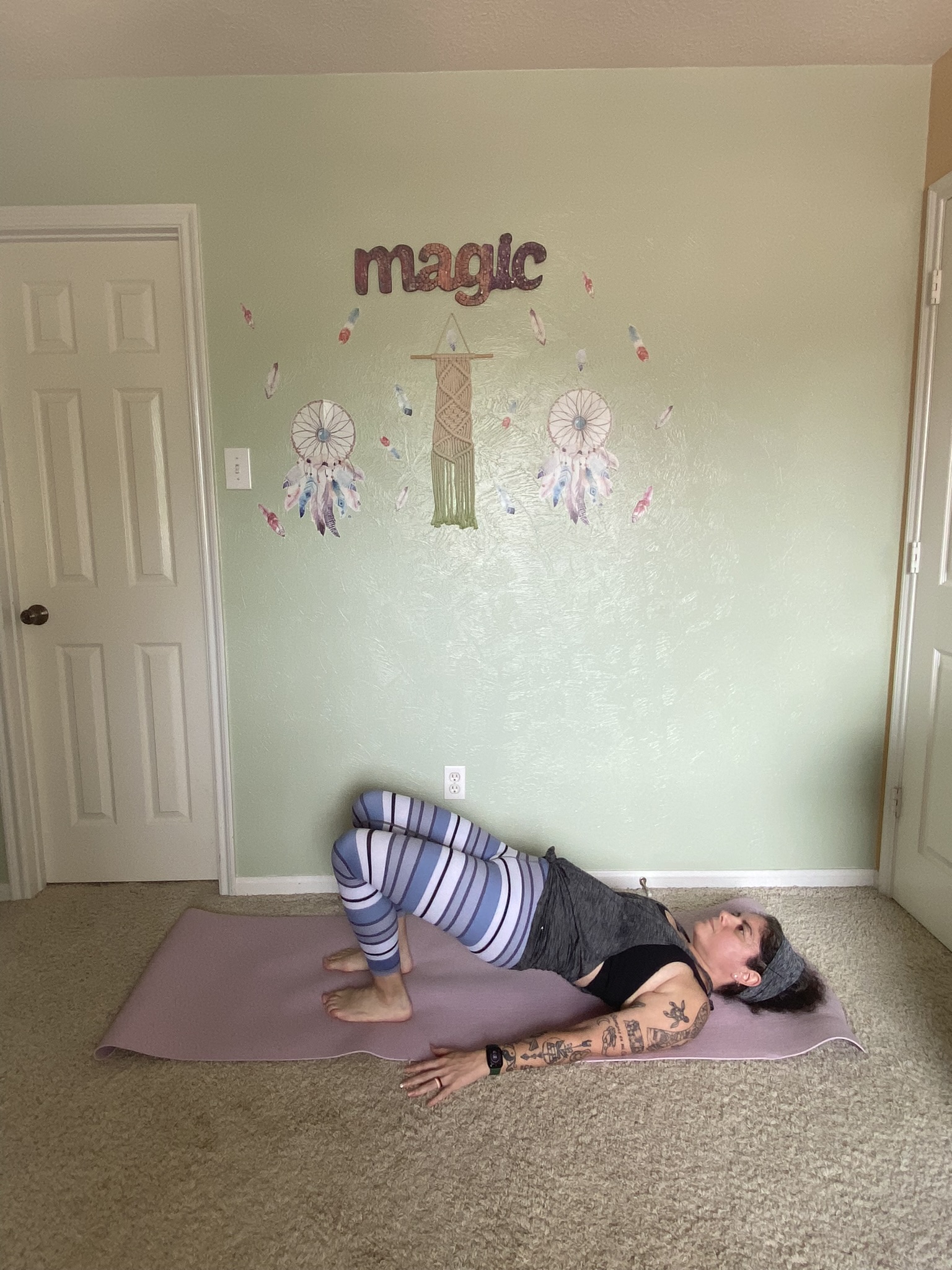
- Setu Bandhasana (Bridge Pose)
- Lie on your back with your knees bent and feet close to the bum. Knees should be about hip-width apart. Press your heels and arms onto the floor and lift your hips towards the ceiling making one long line from your head to your knees. Squeeze the bum at the top, making sure not to hyperextend your back (to avoid any back pain).
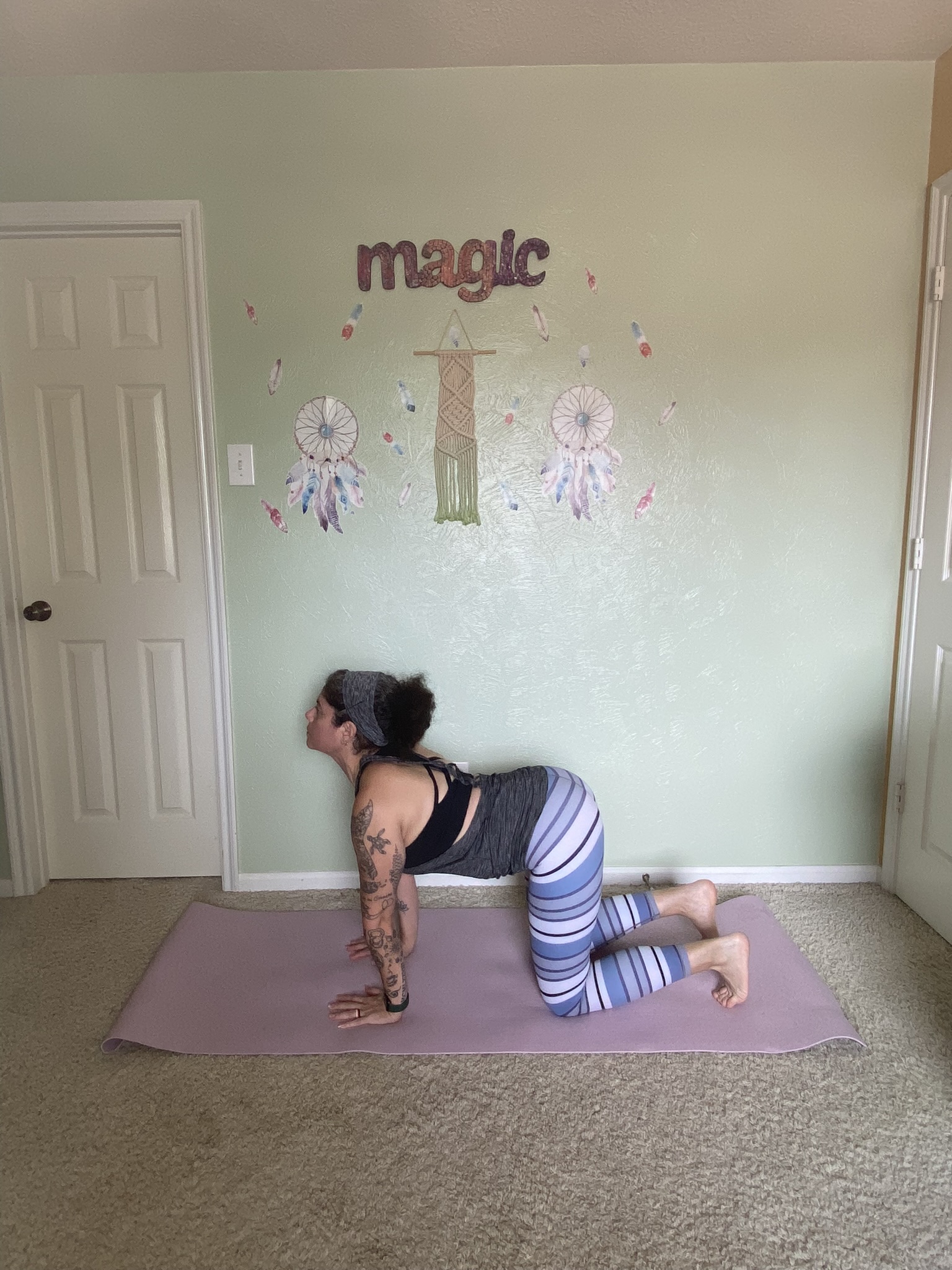
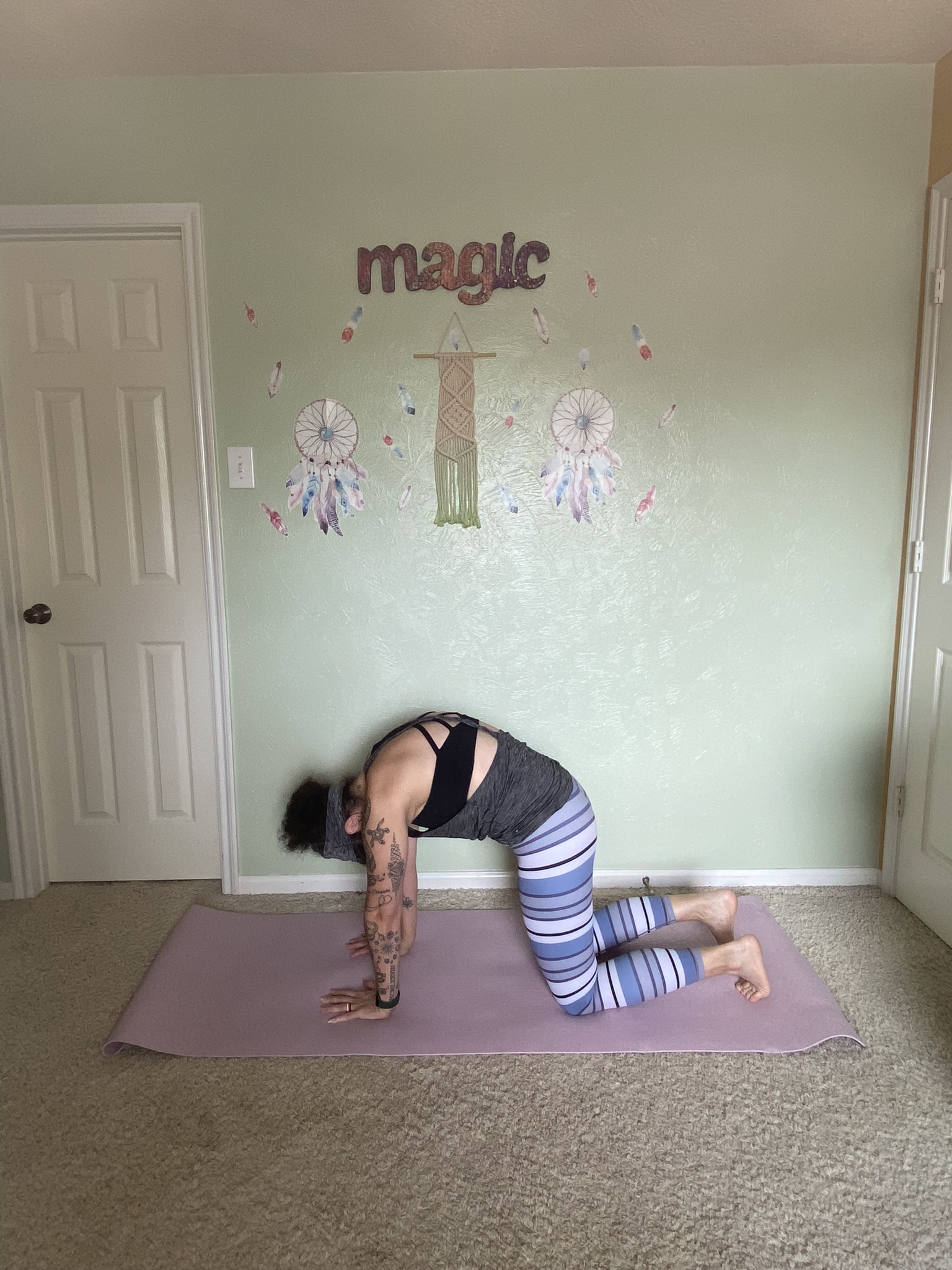
- Marjaryasana-Bitilasana (Cat-Cow)
- Start on your hands and knees (tabletop) with a neutral spine. Inhale and arch your back, lifting your head and tailbone (Cow Pose). Exhale and push into the ground to round your spine making sure to tuck your chin to your chest and tailbone under (Cat Pose). **You can keep your toes tucked or feet flat on the floor**
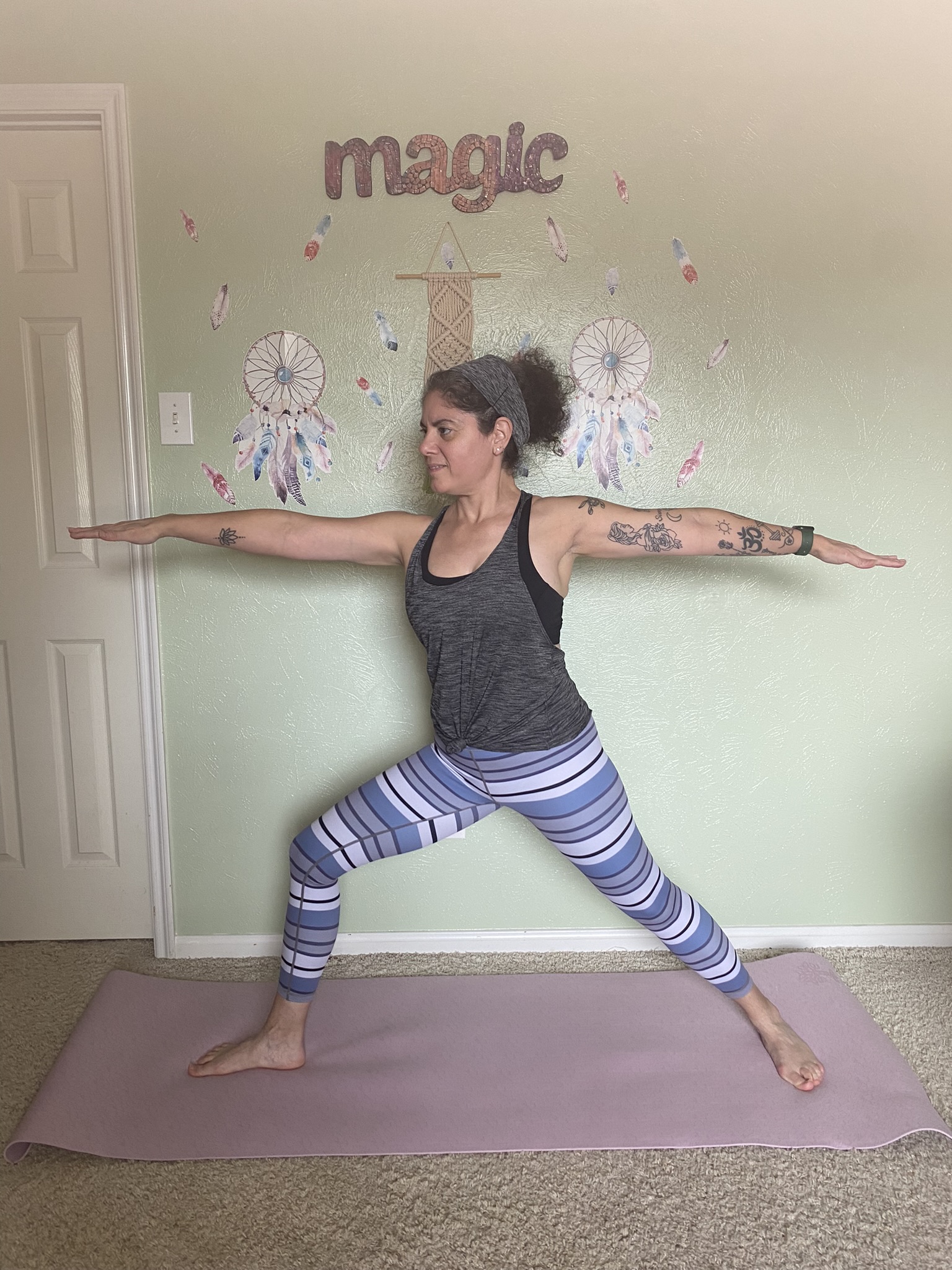
- Virabhadrasana II (Warrior II)
- Stand facing the long side of the mat with feet wide apart. Turn your right foot towards the front of the mat (at about 90 degrees). Your left foot will be parallel to the short side of the mat. Extend your arms out to the sides at shoulder-height and bend your right knee, in line with your ankle. Your hips will be about 45 degrees from your front leg.
- Finally, your gaze will be towards the front looking over your right hand. **You might have to play around with your stance to see what feels comfortable. You want your knees behind your toes**
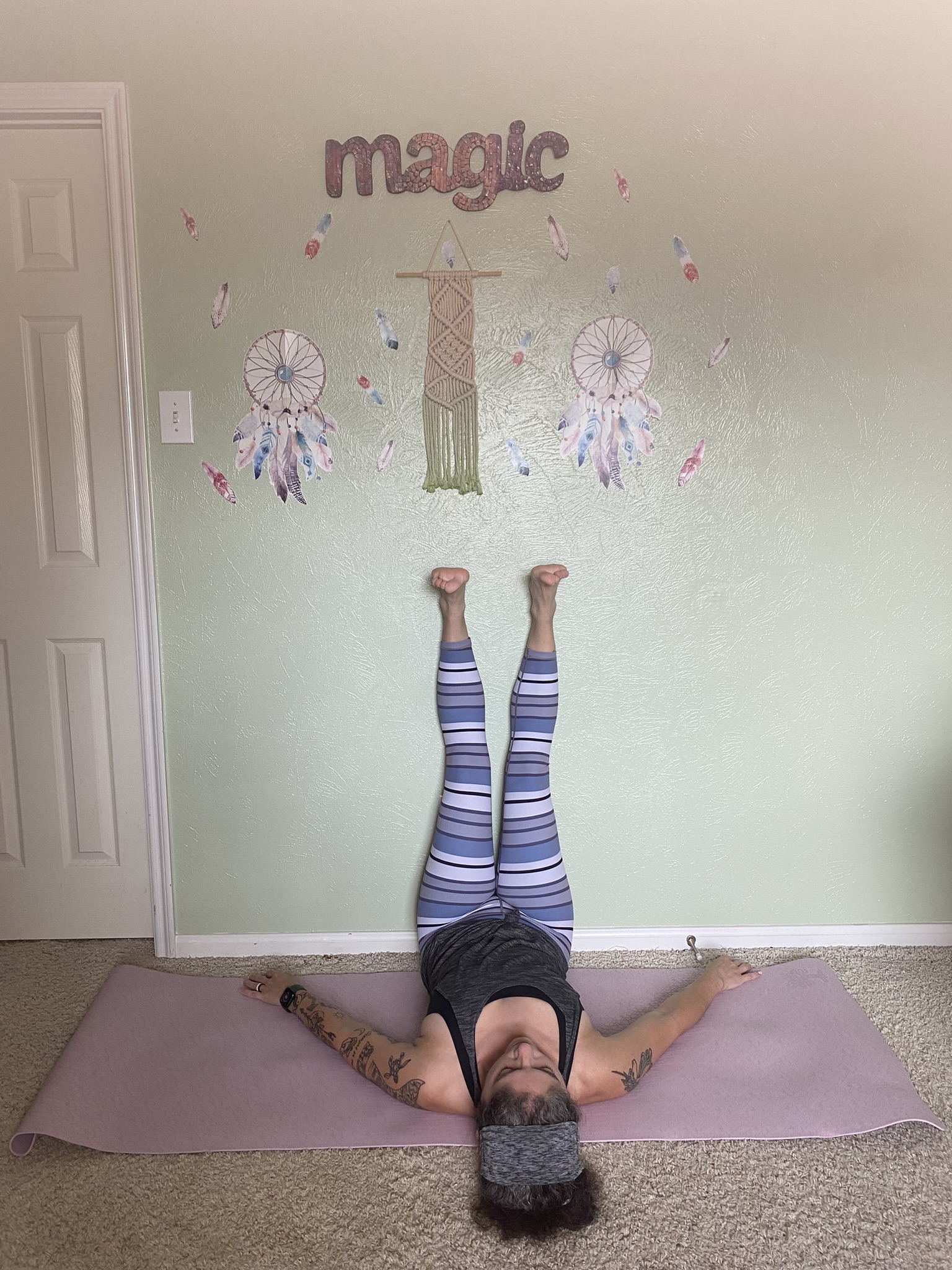
- Viparita Karani (Legs up the wall pose)
- Sit with one side of your body against a wall. Lie down on your back and swing your legs up the wall trying to get your bum as close as possible. Relax your arms at your sides and focus on your breath.
- Agnistambhasana (Firelog Pose), Sukhasana (Easy Pose), or Padmasana (Lotus Pose)
- Sit on the floor with your legs straight. Bend your right knee and then bend your left knee and place your left foot on top of your right knee. Rest your hands on your knees either palms up, down, or in a mudra.
- For Easy Pose, place one foot in front of the other when sitting down.
- Not pictured is Lotus Pose. You start by sitting in Firelog Pose and then trying to bring your right foot on top of your left knee (so both feet will be over the knees).


In conclusion, all of the yoga poses mentioned above are great for cultivating mindfulness. Each asana fosters grounding and a deep connection between the breath and body which helps you become present in the moment by reducing distractions. They help to release physical tension, heighten your body awareness, and help to regulate emotions, all of which are important components of mindfulness. By adding these asanas into your regular yoga practice, you can activate your parasympathetic nervous system and bring an increased sense of calm, focus, and inner peace. Therefore, making yoga a powerful practice for strengthening mindfulness and overall well-being.


 Grounding Fitness, LLC